Vitalis — Biologically Active Supplements Online Store for Europe: Working Prototype in One Day

What's Done
The online store is built using Next.js — a modern technology that powers the world's largest e-commerce sites — and Claude AI. It's built professionally, in the best traditions of 2026 programming: the source code is on GitHub with complete architectural documentation. The store's code is the customer's confidential information: the repository is private, not publicly accessible, and only the store owner gets access. The project is deployed on a server and operates at a permanent address. For the customer, this means one simple thing: you are not tied to a single developer — any programmer can open the code, read the documentation, and continue developing the store.
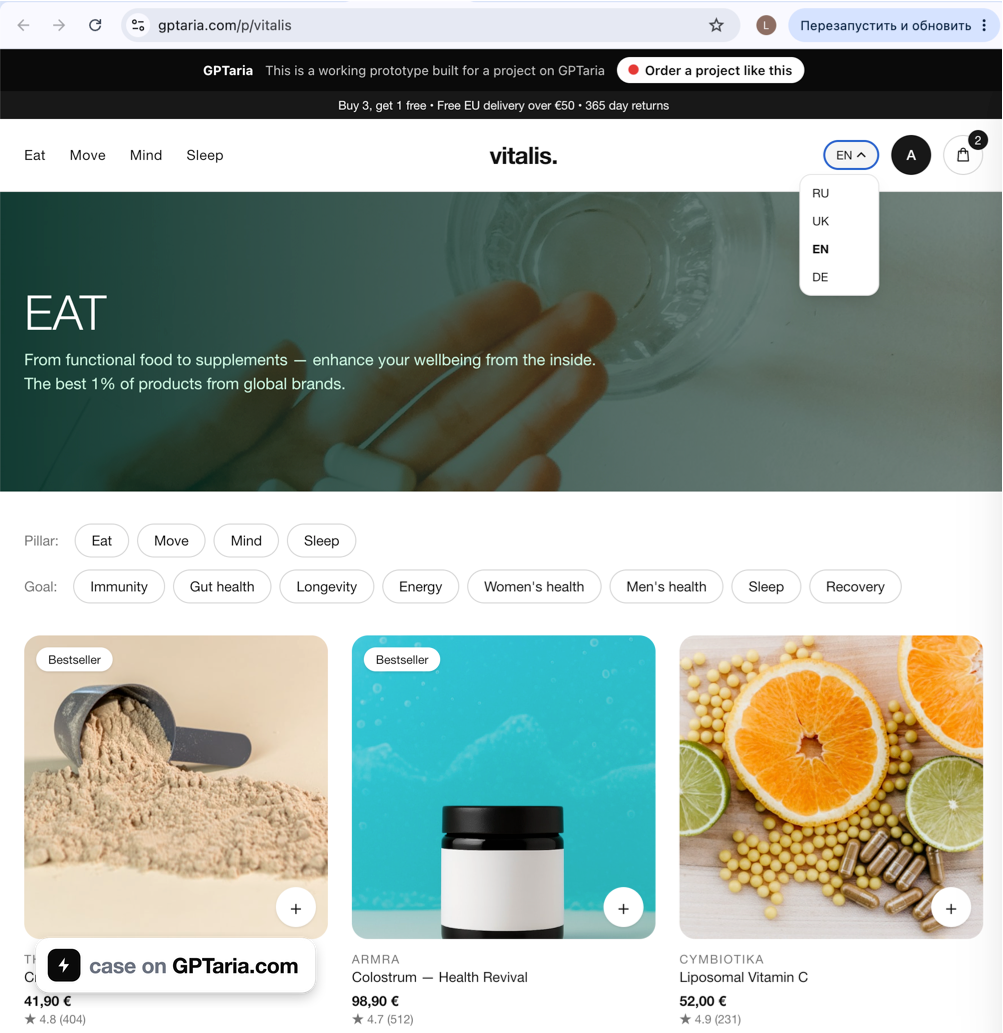
Vitalis — a prototype for a dietary supplement store in Europe. Task: An online store for dietary supplements for sales across Europe, in the spirit of curated wellbeing marketplaces (reference — healf.com), without ready-made platforms like Shopify — only custom development.
Live Demo: www.gptaria.com/p/vitalis — this isn't just pictures, it's a working store: feel free to explore and click around.
A Catalog That Helps You Choose
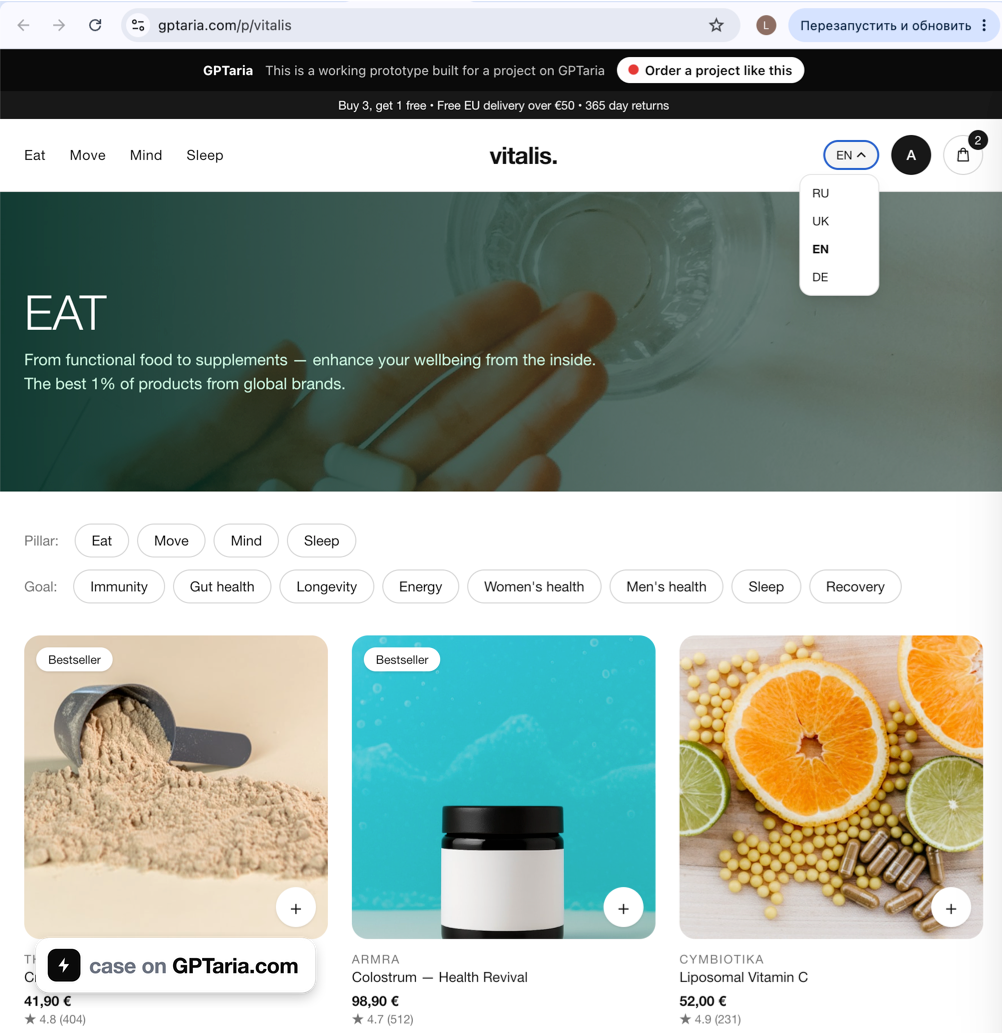
Products are categorized into four health areas — Nutrition, Movement, Mind, Sleep — and by goals: immunity, digestion, sleep, longevity, energy. Customers don't scroll through an endless list; they start with their objective: "I want to sleep better" — and only see relevant products. Each product card includes a photo, brand, rating with reviews, and price.
Recommendations That Increase Average Order Value
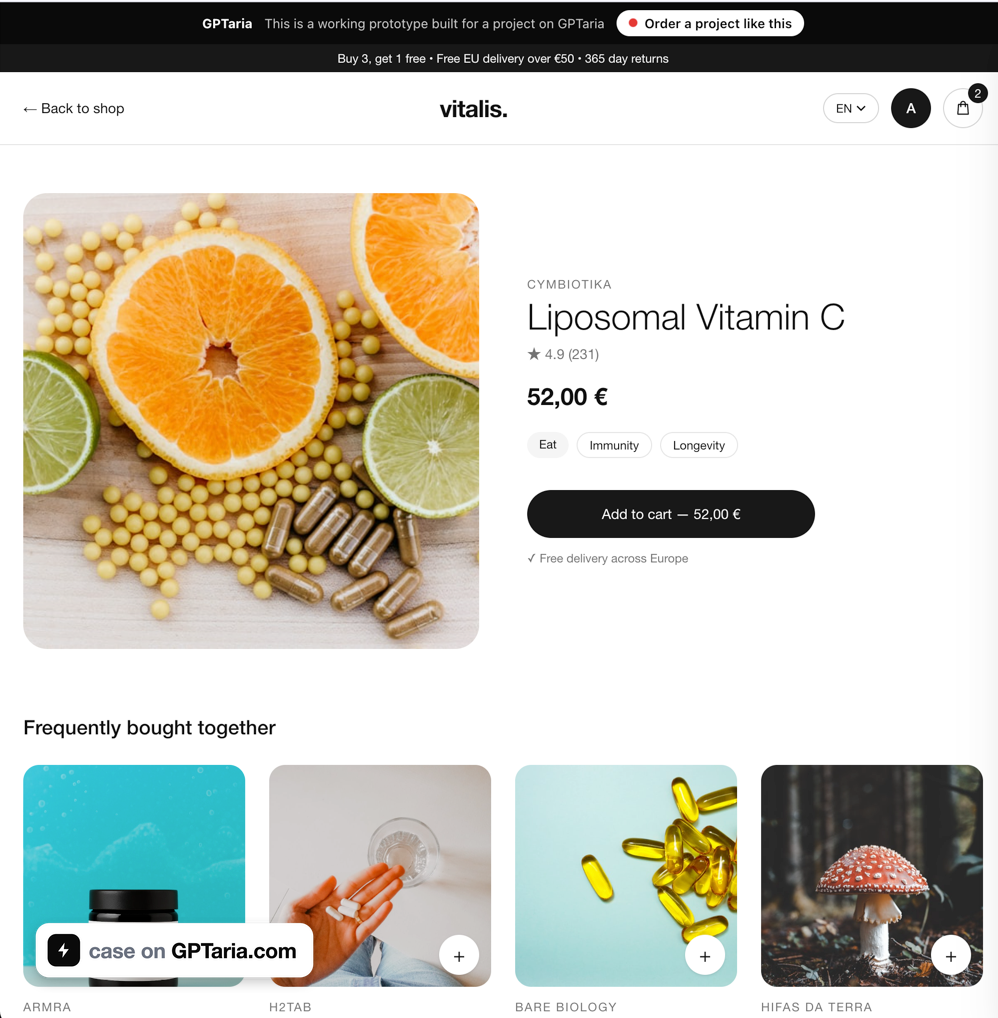
Each product card features a "Frequently Bought Together" section. It doesn't show random items: recommendations are based on matching goals — creatine might be paired with protein and magnesium because they are often purchased together. This is how upselling works without a salesperson.
A Cart That Sells Itself
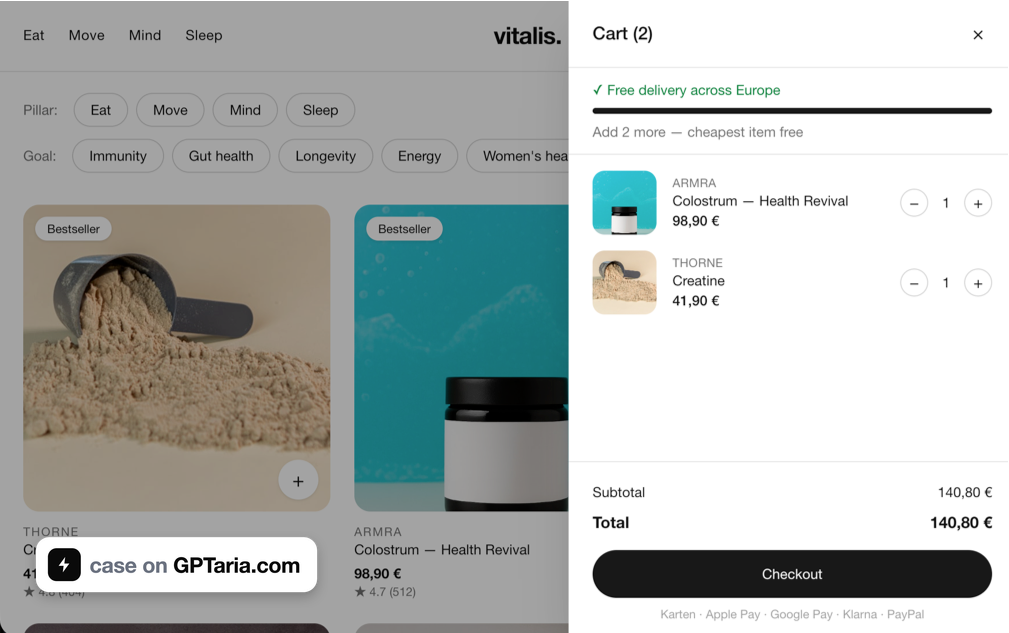
The shopping cart incorporates two sales mechanics: a "buy 3, get 1 free" promotion (the cheapest of the four is free) and a progress bar for free shipping over €50 — the customer sees "add €12 more" and adds items. The cart contents are preserved when navigating the site.
Customer Personal Account — Fewer Support Inquiries
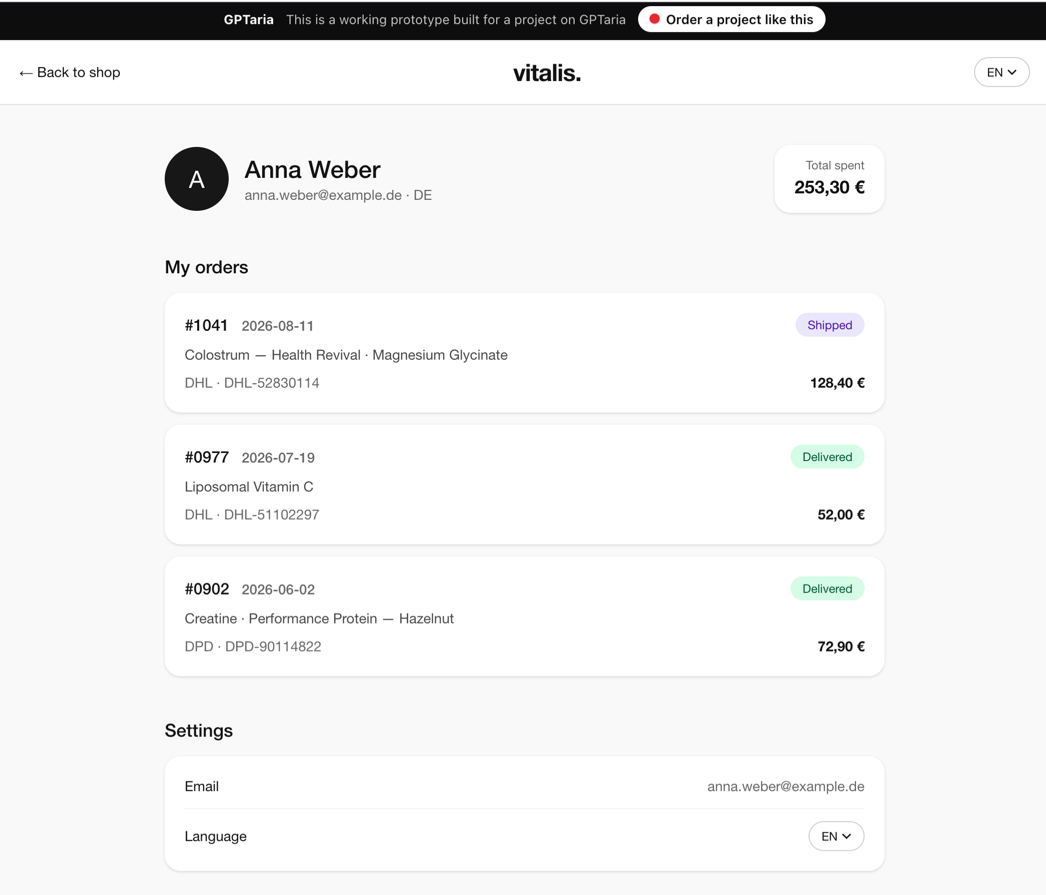
Customers have their own account: order history with dates, contents, amounts, and statuses — paid, shipped, delivered, returned — and the carrier's tracking number (DHL, DPD) directly in the order card. The most common question to an online store's support is "where is my order?"; here, the customer answers it themselves, without an email or call.
There, the customer also sees the total amount of all their purchases in the store — this is convenient for implementing a loyalty program: accumulate a certain amount, get a status and a discount. In settings, the customer can change their email and interface language — the same four languages as on the storefront, so a German customer reads their orders in German.
Ready-Made Website and Sales Management System (CRM)
The store comes with an admin panel — no need to purchase and integrate a separate management system. It's accessible at /admin and requires no technical knowledge: everything is edited in a table, like a regular file.
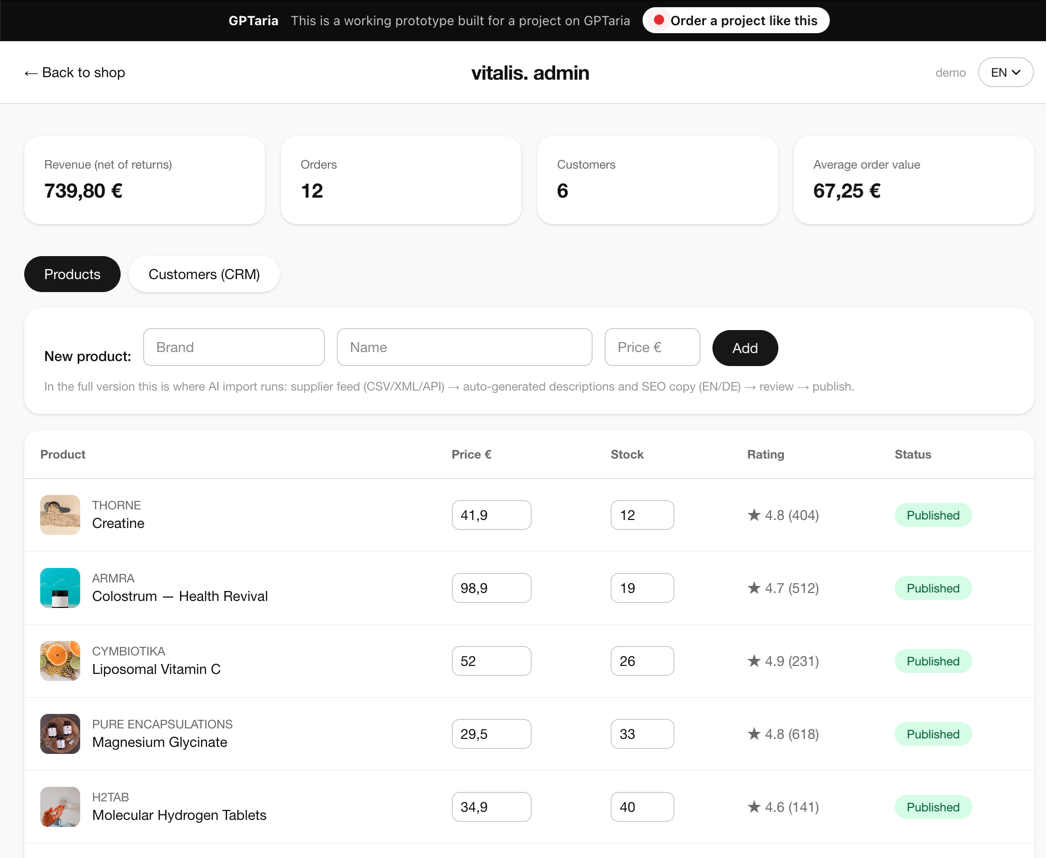
Money at the top. Four metrics typically checked in reports: revenue excluding returns, number of orders, number of customers, and average order value. The owner sees the store's status the moment they log in.
"Products" tab — managing the storefront. Price and stock can be edited directly in the table row, status can be switched between "Published" and hidden, new products are added with three fields — brand, name, price. Ratings and number of reviews are pulled for each item. In the full version, an AI import function is available here: supplier feed (CSV / XML / API) → auto-generation of descriptions and SEO texts in EU languages → moderation → publication, meaning a thousand items can be added without manual entry.
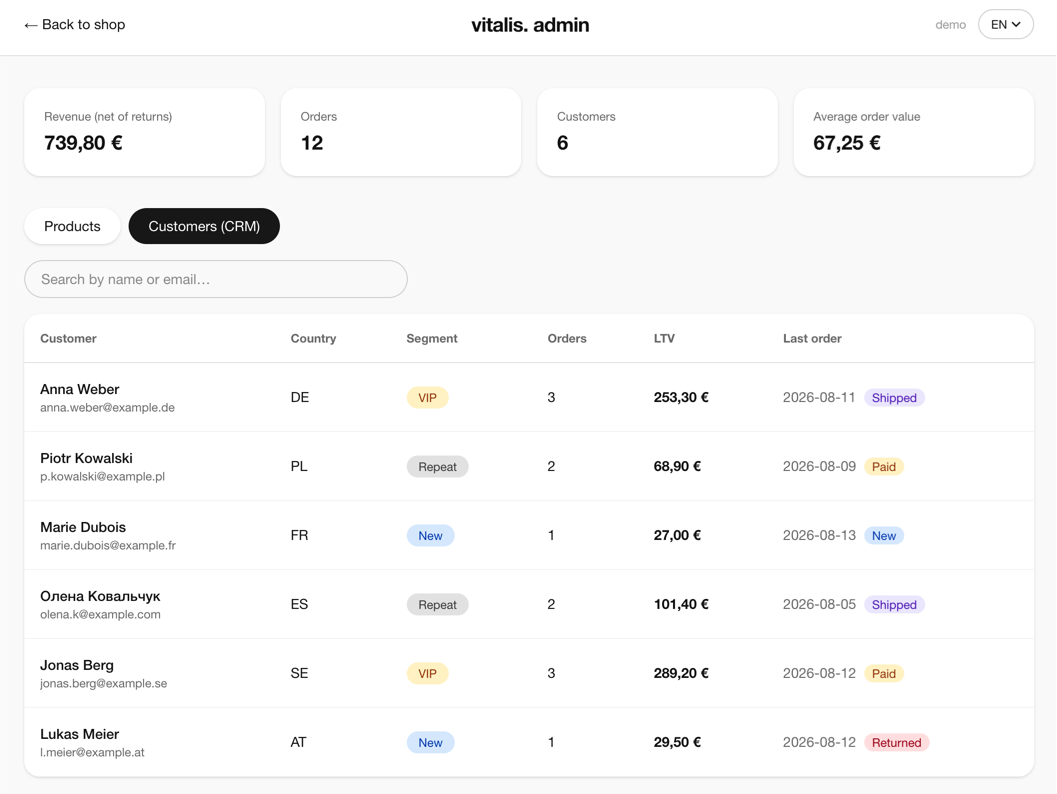
"Customers (CRM)" tab — a database for repeat sales. For each client: country, number of orders, LTV, date and status of the last order, search by name and email. The system automatically segments customers — new, repeat, VIP — and these are ready-made lists to work with: VIPs get early access to new arrivals, repeat customers receive reminders when their supply is running low, and new customers get a welcome email. In the dietary supplement business, profit comes from the second and third orders, not the first, so segments are not just report decorations but revenue-generating tools.
View the admin panel: www.gptaria.com/p/vitalis/admin — it's open in demo mode with sample data.
SEO and AI Visibility — Built-in, Not an Afterthought
The store features an automatic SEO mechanism: when a product or article is added, all necessary on-page meta information — titles, descriptions, markup for search engines (schema.org) — is generated automatically. This information is read by both Google and AI systems: ChatGPT, Gemini, and other AI assistants, which people increasingly turn to asking "where to buy." Promotion works on its own: no need to hire a separate SEO firm and redo the site later — the store is born visible. In the full version, AI also automatically writes compelling descriptions and SEO texts in EU languages for each imported product.
Four Languages — Sales Across Europe
Ukrainian, Russian, English, and German are already functional: a switcher in the header, and everything is translated, including the menu. The architecture is ready for any EU language — entering a new market doesn't require redeveloping the store.
Mobile Version
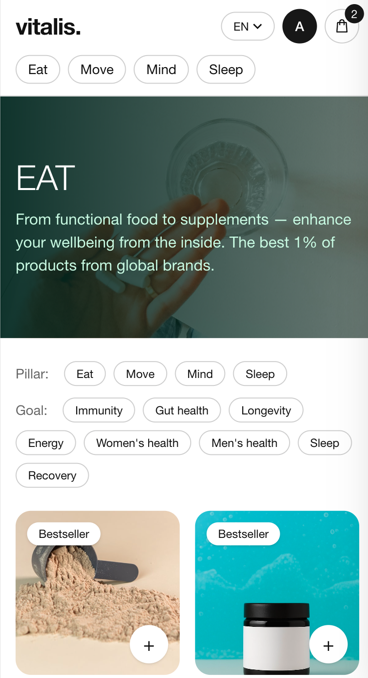
Full mobile adaptation: compact header, navigation by health areas, product grid optimized for narrow screens. Most dietary supplement purchases are made from smartphones — the store is ready for this.
How the Work Progressed
A working prototype was ready on the day of the initial contact — in hours, not weeks. Iterations followed the same pattern: the client requested changes, and saw the results on the same link the same day. Based on this feedback, the client made an offer — the project was closed with a deal.
What's Included in the Full Version
AI-powered product import from supplier price lists with auto-generated descriptions and verification of health claims according to EU regulations (Regulation 1924/2006), Stripe / PayPal / Klarna payments, DHL / DPD / GLS / InPost shipping, PostgreSQL database, and fast search with filters.
Stack: Next.js 15 · React 19 · Tailwind CSS 4 · TypeScript · Claude.
Like this case?
Start a similar project — describe "I want the same", and builders will send working prototypes. A link to this case is already in the brief.
Order a similar project